
 A Molecular and Integrative Physiology Lab
RESEARCH TOPICS
Computational Biology, Ion Channels, Learning and Memory, Neurobiology, Pattern Formation, Sensory Processing
NEURAL BASIS OF DECISION
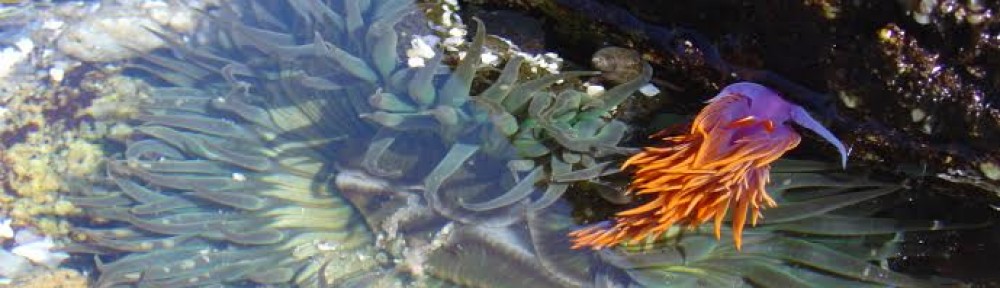
Our research is aimed at how animals organize their behavior by integrating motivation, experience and sensation. Our lab analyzes decision-making in behavioral expression and the underlying neural network circuitry. We analyze interactions of neural networks and the regulation of network activity by cell signalling pathways involving neuromodulatory messengers and second messenger pathways. We use the carnivorous marine snail Pleurobranchaea californica and the octopus as model systems. We compare the simple behavior and brain of the snail that underlie its success as a generalized predator with those of the octopus to understand the evolution of cognitive complexity. A corollary activity emerging from the behavioral and physiological work is the development of software (Cyberslug and ASIMOV) and hardware platforms for autonomous cost-benefit decision-making and robotics.
LAB TOUR
News
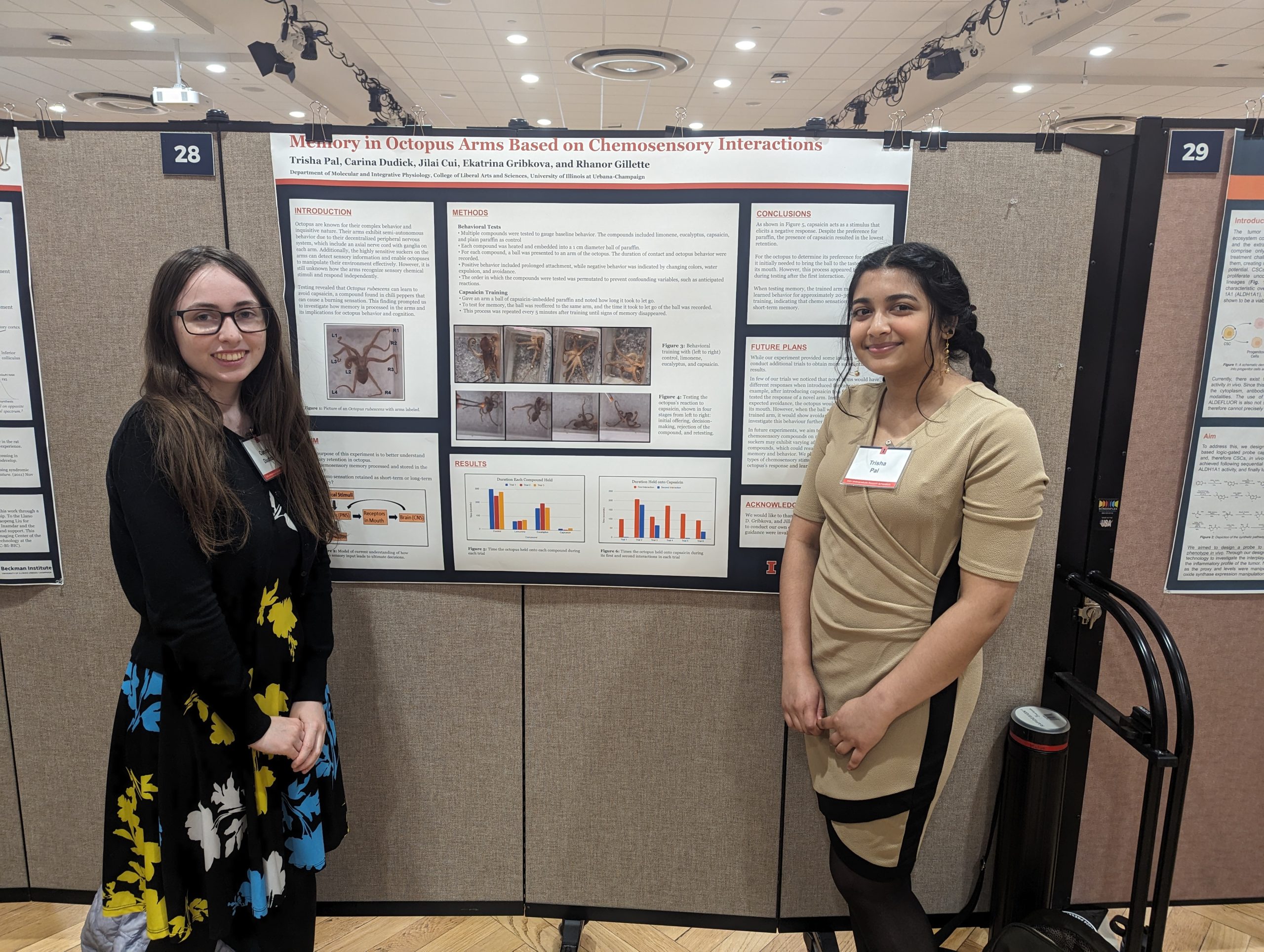
Carina (Left) and Trisha (Right) presenting their work at Undergraduate Research Symposium!
Thursday, April 25, 2024