| |
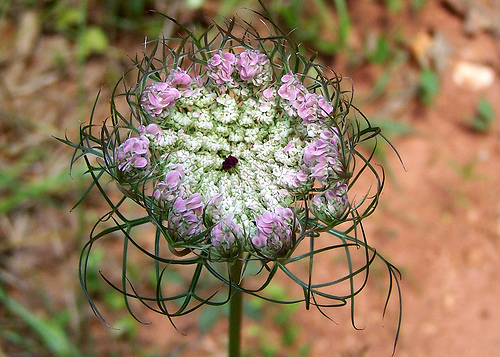
Pink Queen-Anne's Lace (Wild Carrot) flower, from "http://www.flickriver.com/photos/tanneberger/2632094562/" Copyright © by William Tanneberger |
Current and Recently Graduated Lab Members
Research in our laboratory focuses primarily on the evolution and systematics of the plant family Apiaceae. Currently, this research extends from studies of phylogenetics and biogeography of certain genera and major clades to comparative chloroplast genome structural organization of the family using next-generation sequencing technologies. The research carried out is international and collaborative, with many projects underway. Below are current members of the Downie Lab plus a few others that have recently graduated.
|
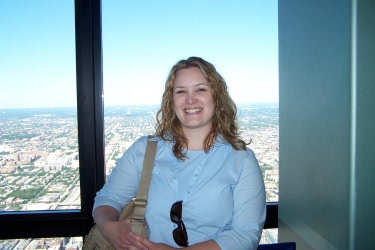
Rhiannon Peery |
Rhiannon Peery
For her Ph.D. dissertation, Rhiannon is studying chloroplast genome evolution in the family Apiaceae. Rhiannon has documented unprecedented variation in structure of some of these genomes, including what might possibly be the first documented case of an intracellular gene transfer of a mitochondrial sequence into the plastid genome. Rhiannon proposes to characterize these unique insertions, elucidate mechanisms for their insertion into the plastid genome, and determine when and where this possible gene transfer occurred with reference to a phylogeny of the group. She believes that the Apiaceae provides a model system for determining how the chloroplast inverted repeat is evolving. To date, Rhiannon has sequenced five complete plastid genomes from Apiaceae and her results to date, while still preliminary, appear rather extraordinary.
|
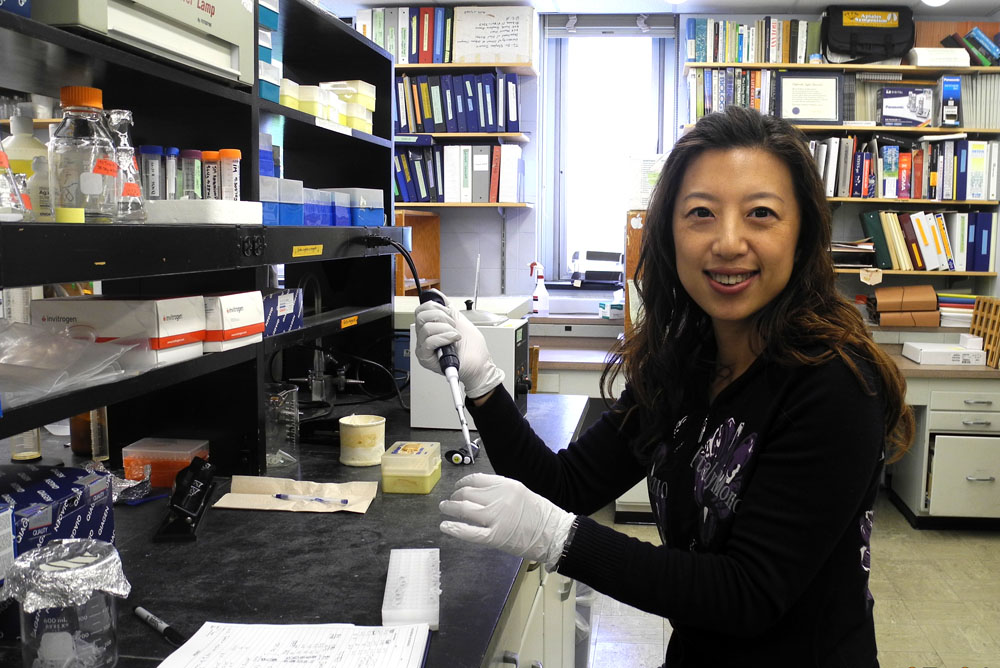
Visiting Scholar Yue Xu |
Yue Xu
Yue is a visiting scholar from Jilin University, China and has begun a project to resolve relationships within the apioid superclade of subfamily Apioideae. The apioid superclade is a morphologically heterogeneous group comprised of at least 12 major clades of uncertain relationship. To date, phylogenies of these taxa have been based primarily on nrDNA ITS sequences, but resolution of relationships, as well as the formal recognition of several major clades, must await supporting data from the plastid genome. Yue is using cpDNA sequences, specifically those from the region bounded by genes psbM and psbD, to assess these higher-level relationships. Within several of these tribes, intergeneric relationships are also being examined.
|
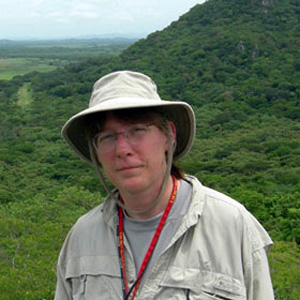
Mary Ann Feist in the Queen Charlotte Islands, British Columbia. A possible refugium for Oxypolis occidentalis during the last ice age? |
Mary Ann Feist (graduated May 2011)
Mary Ann's Ph.D. research resulted in a monograph of the North American genera Ptilimnium and Oxypolis and their allies. Included here is the federally endangered species Ptilimnium nodosum. Her first paper on the group, based on results of phylogenetic analyses of nrDNA ITS sequences, suggested that neither Ptilimnium nor Oxypolis is monophyletic, with the rachis-leaved members of each comprising a clade separate from their compound-leaved congeners. A recent study using cpDNA sequences and fruit anatomical characters confirmed this earlier work and resulted in the resurrection of genera Tiedemannia and Harperella. Among the many awards that Mary Ann has received to date include a Catherine H. Beattie Fellowship for Conservation Horticulture, a John R. Laughnan Travel Award, a Francis M. and Harlie M. Clark Research Support Grant, and selection for participation in NSF's East Asia and Pacific Summer Institute Program. Mary Ann is currently employed at the Illinois Natural History Survey.
|
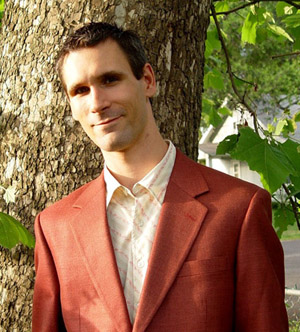
Clark Danderson, out standing in his field! |
Clark Danderson (graduated May 2011)
For his dissertation research, Clark studied the Arracacia clade of umbellifers, with emphasis on the Rhodosciadium group. The Arracacia clade comprises some ten genera and 100 species distributed in montane regions of Central and South America. His work indicated that many genera within the clade are not monophyletic and that the characters used traditionally to circumscribe these taxa are overlapping and variable. Clark used sequence data from nrDNA ITS, nrDNA ETS, and cpDNA to elucidate phylogenetic and biogeographic relationships, resulting in a taxonomic revision of Rhodosciadium and its allies. In recognition of research excellence, Clark recently received a Francis M. and Harlie M. Clark Research Support Grant, a Harold C. and Sonja L. Labinsky Award, a Herbert H. Ross Memorial Award, and a travel grant from the Graduate College.
|
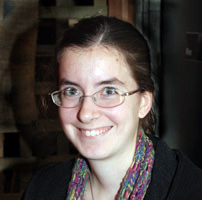
Jenny Stratton, nee Cordes |
Jenny Stratton, nee Cordes (graduated May 2009)
Jenny considered the systematics of the genus Conium for her M.S. degree. Conium maculatum (poison hemlock), one of the most toxic members of the plant kingdom, was responsible for the death of Socrates. The genus is viewed as either monotypic or encompassing five species. Jenny used morphology and molecular markers to delimit species within the group and to ascertain their phylogenetic relationships. In recognition of her research achievements, Jenny received a Francis M. and Harlie M. Clark Research Support Grant and a travel grant from the Graduate College to present a poster at the Botany meetings in Vancouver, British Columbia.
|
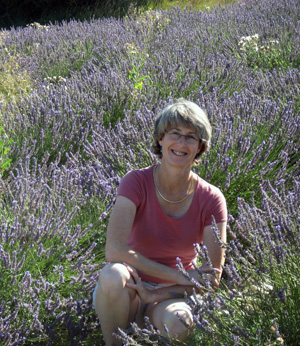
Deborah Katz-Downie in a field of lavender in Provence, France
|
Deborah Katz-Downie
While not technically a student, Deborah is involved in a number of research projects in the laboratory. Her major responsibility, however, is to keep the lab running smoothly. She is in charge of the financial statements, dealing with the sales reps, ordering supplies and equipment, and making travel arrangements. Students in the laboratory (as well as international visitors and postdocs) are aided by Deborah's vast knowledge of the community, her great organizational skills, and her ability "to get the job done." Deborah also volunteers frequently to do the more tedious chores, such as editing sequence data and proof-reading manuscripts, and for this (and more, such as organizing a move to Austin, Texas where Stephen was on sabbatical leave in Bob Jansen's lab) her services are greatly appreciated! Deborah's current research projects include the phylogenetics of tribe Oenantheae and Apiaceae chloroplast genomics.
|
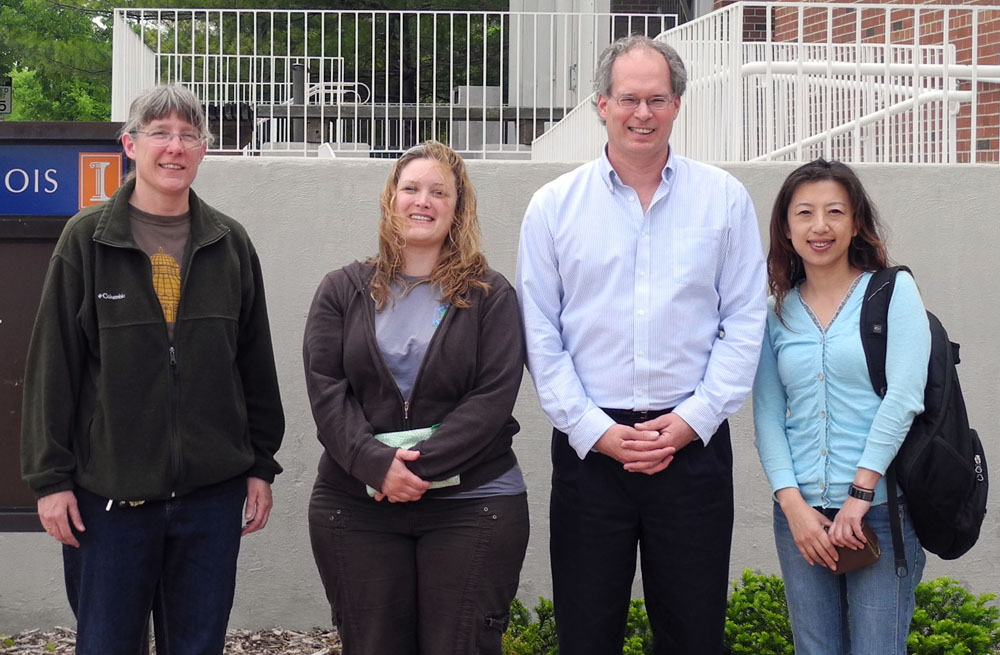
Downie Lab Group, May 2012. |
Downie Lab Group, May 2012
Left to Right: Mary Ann Feist, Rhiannon Peery, Stephen Downie and Yue Xu
|
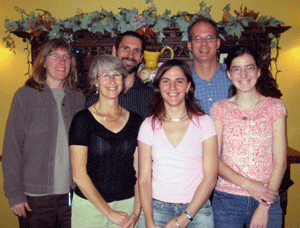
Downie Lab Group, December 2007. |
Downie Lab Group, December 2007
Left to Right: Mary Ann Feist, Deborah Katz-Downie, Clark Danderson, Carolina Calviño, Stephen Downie and Jenny Cordes
|
|
|
|
|
